
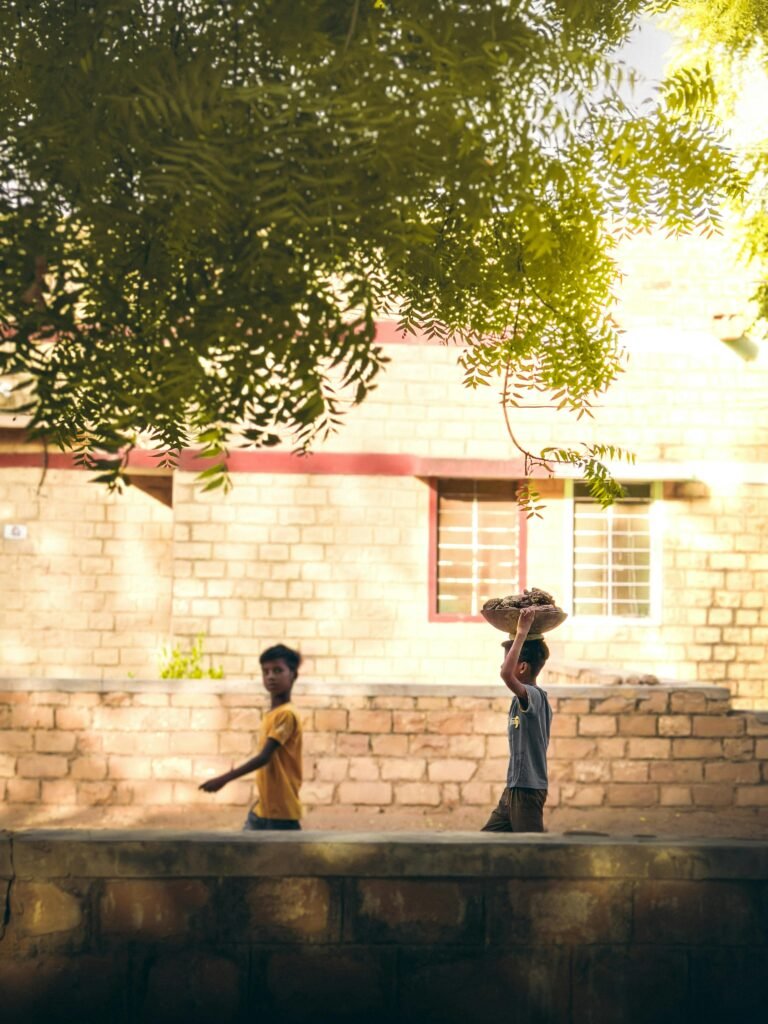
Childhood and struggle often live side-by-side in the narrow lanes of rural India. The photograph above captures a moment that is both ordinary and extraordinary — two children walking along a sunlit path, each carrying a different weight, both literal and symbolic. This image, though simple at first glance, holds deep stories about community life, childhood responsibilities, and the unseen realities that shape rural India.
The golden sunlight filtering through the tree leaves paints a beautiful atmosphere. Yet, beneath that beauty lies a world many do not often talk about — the world where children grow up faster than they should, where work and play exist in the same day, and where responsibility becomes part of life at a very young age.
In this article, we explore the meaning, symbolism, social context, and emotional depth of this moment. This is not just a photograph — it is a window into the lives of millions of children whose stories remain untold.
A Simple Scene with a Powerful Story
At first glance, the image appears peaceful. A bright afternoon, soft shadows on the brick wall, and two children walking along a quiet street. One of them carries a basket on their head, filled with materials or goods — perhaps for household work, perhaps for labour. The other child looks toward the camera, caught in a moment of curiosity.
These small gestures carry meaning:
- The child with the basket represents responsibility, a visible reminder of the work young children often contribute to their homes and communities.
- The other child, walking casually, represents the innocence of childhood — the part that remains untouched even in challenging circumstances.
This contrast is what makes the image powerful.
Childhood in Rural India: The Unseen Layers
India’s rural landscape is full of such scenes. Children grow up in communities built on shared responsibilities, family bonds, and cultural traditions. But with these come challenges such as:
- Limited access to education
- Economic pressure on families
- Responsibilities at home from a young age
- Daily labour to support households
While childhood is universally meant to be a time of freedom and imagination, for many children in rural areas, it becomes a blend of learning, playing, and contributing to the family’s livelihood.
This photograph captures that blend beautifully.
The Weight Carried on Small Shoulders
The basket on the child’s head symbolizes much more than just physical weight.
It represents:
- Economic responsibility
- Family duty
- Resilience in the face of hardship
- The survival mindset common in rural communities
For many children, helping with daily chores or labour is not optional. It is part of their identity, part of their upbringing, and often the only way to support their families. Despite this, their spirit remains strong, and their dreams continue quietly beneath the surface.
Curiosity and Hope – The Other Side of the Image
The second child in the frame appears curious, perhaps surprised by the presence of the camera. This gaze symbolizes:
- A spark of curiosity
- An untouched innocence
- A desire to understand the world beyond their surroundings
Children everywhere share this curiosity. Whether in cities, villages, or remote areas, children naturally observe, question, and imagine. This moment reminds us that despite their challenges, rural children still dream, still wonder, and still carry hope.
The Rural Background: Homes Built on Hard Work
The brick house in the background reflects the architecture common in many parts of rural India — simple, sturdy, functional. These homes are built over time, often brick by brick, through the effort of families who may not have formal resources but have determination and unity.
The sunlight passing through the leaves creates a warm, calming mood, showing that beauty exists even in the toughest environments. Nature plays a big role in rural life — shade from trees, open spaces to play, and a daily connection with the outdoors.
Why This Image Matters
This photograph is meaningful because it highlights a reality we often overlook. Millions of children in India live this life daily: working, helping their families, balancing childhood with responsibilities. It reminds us:
- There are stories hidden in ordinary moments.
- Every child has a world of dreams we may not see.
- Rural communities survive on the strength and contributions of every member, even the youngest.
The image encourages us to reflect, appreciate, and acknowledge the strength found in these environments.
Child Labour vs. Household Responsibility: Understanding the Difference
It is important not to jump to assumptions. Not every child helping at home is a victim of harmful labour practices. Many rural families rely on traditional household roles where children assist in work safely and naturally.
However, the fine line lies here:
- Healthy Responsibility: Light chores, helping parents, learning life skills.
- Harmful Labour: Work that affects education, health, or safety.
This image opens up a conversation about these realities — urging society to protect childhood while respecting cultural practices.
The Emotional Impact of the Photograph
What makes this image emotionally powerful?
1. Contrast Between Innocence and Responsibility
One child looks carefree, the other carries a burden. This contrast tells the story of childhood in rural societies.
2. Natural Beauty vs. Human Struggle
The peaceful, golden environment contrasts with the hardships many children face daily.
3. A Moment Frozen in Time
Photographs like this preserve stories that might otherwise disappear.
A Reminder to Value Education
Education is often the turning point for children in rural India. It provides:
- better job opportunities
- financial stability
- social empowerment
- awareness and confidence
Images like this remind us how important it is to support educational access for all children, especially those who juggle school with domestic or economic responsibilities.
The Hope Hidden in Everyday Life
Despite difficulties, rural communities are full of hope. Children continue to dream, laugh, play, and imagine new possibilities. The child looking toward the camera reflects this hope — a moment that says:
“I see the world. And someday, the world will see me.”
This is the beauty of rural India: strength and hope growing side by side.
Why Photographs Like This Are Important for Awareness
Visual storytelling is one of the most powerful ways to create change. This photograph:
- Raises awareness
- Builds empathy
- Encourages conversation
- Captures unfiltered truth
Through such images, people become more aware of the challenges faced by rural communities and the importance of supporting children’s rights, education, and welfare.
Conclusion: A Story of Strength, Hope, and Everyday Life
This image is more than just two children walking past a wall. It is a reminder of:
- the strength of rural communities
- the resilience of children
- the beauty hidden within hardship
- the hope that lives in young hearts
Every child deserves a chance to grow, learn, and dream. And sometimes, a photograph like this captures that hope more clearly than words ever could.
This story encourages us to look closer, understand deeper, and support the children who will shape the future of rural India.