
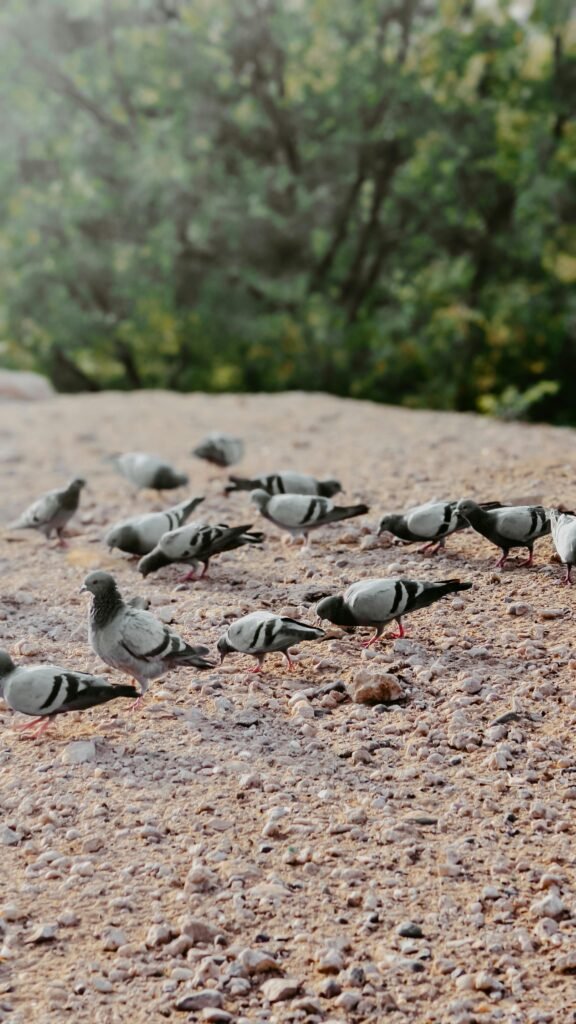
In a world that moves faster each day, nature still finds subtle ways to remind us to slow down. The sight of pigeons gathered peacefully on a sunlit ground, pecking gently at grains, is one such moment. It’s simple, quiet, and ordinary — yet deeply calming. The image above captures this timeless scene: a flock of pigeons feeding together on a rocky surface, surrounded by the soft greens of nature in the background.
At first glance, it’s a picture of birds. But when you observe it closely, you discover something much deeper — a glimpse into the delicate balance of urban wildlife, the beauty of coexistence, and the quiet poetry of everyday nature.
This article explores the meaning, behavior, and environmental significance reflected in this serene moment. From understanding pigeon behavior to appreciating the soothing essence of simple nature scenes, we’ll dive into everything this photograph represents.
A Calm Scene Filled with Life
This photograph is striking because of its simplicity. A group of pigeons gather on textured ground, some pecking at grains while others stand alert, observing their surroundings. Their feathers show soft grey and black patterns, blending beautifully with the earthy tones beneath them.
The background is softly blurred with lush green trees, creating a natural contrast that highlights the birds even more. This visual composition brings a sense of peace, balancing detail and depth.
Even without sound, you can almost imagine the soft cooing of pigeons, the rustle of feathers, and the crunch of gravel beneath their tiny feet.
This is nature in its purest form — unbothered, undisturbed, and real.
The Behavior of Pigeons: A Look Into Their World
Pigeons are often seen in cities, parks, rooftops, and natural open spaces. Yet, many people overlook how fascinating these birds truly are.
1. Social Creatures
Pigeons rarely roam alone. They prefer moving in groups, called flocks, for safety and companionship. This photograph beautifully displays their natural social structure, where birds feed side by side without conflict.
2. Ground Feeders
Pigeons typically eat seeds, grains, and small insects, making the rocky ground in the image an ideal feeding spot. Their behavior here — bending forward, pecking, stepping slowly — represents their natural feeding instincts.
3. Strong Navigation Skills
Though not visible directly in the picture, pigeons are known for their incredible homing ability. They can travel kilometers and still find their way back home.
4. A Calm Yet Alert Presence
Some pigeons in the image are eating, while others stand tall, quietly scanning their surroundings. This shows their survival instinct — sharing responsibility in the flock.
Their behavior is a reminder that even the quietest creatures have complex lives and intelligence worth appreciating.
A Moment of Balance: Birds and the Environment
This image represents a peaceful coexistence between wildlife and the natural world. Pigeons have adapted to almost every environment humans have built — yet they remain deeply connected to nature.
The Earth Beneath Them
The rough, textured ground filled with small stones, dust, and grains reflects a natural feeding environment. It reminds us that even simple landscapes hold life and meaning.
The Trees Behind
The soft green background adds a sense of depth, representing nature’s constant presence even in busy or populated areas.
Light and Composition
The photograph uses natural light beautifully. The sunlight enhances textures, highlights feathers, and adds warmth to the entire scene.
Every element in the picture carries harmony — earth, trees, birds, and light.
The Symbolism Behind Pigeons
Throughout history, pigeons have carried symbolic meaning:
1. Peace and Calm
Pigeons, especially white ones, symbolize peace worldwide. Even grey pigeons like these evoke a sense of calm because of their gentle behavior and soft cooing.
2. Community
Their flocking nature represents unity. Just like in the photograph, pigeons often stay close, showing the strength of togetherness.
3. Simplicity and Balance
Pigeons adapt to simple conditions. They find food, shelter, and safety in basic environments — teaching us that life’s beauty often lies in simple moments.
The photograph captures all these symbolic meanings subtly, making it both artistically and emotionally powerful.
Pigeons and Urban Wildlife: A Connection We Often Forget
Cities are expanding, but birds like pigeons continue to thrive. They bridge the gap between humans and nature.
The image reminds us:
- Nature still breathes — even in crowded or modern spaces.
- Wildlife adapts — finding comfort in the everyday.
- Harmony is possible — when humans respect natural ecosystems.
Pigeons are often misunderstood or overlooked, but their presence shows that urban spaces can support life beyond humans.
Why This Scene Feels Emotionally Comforting
The emotional effect of this photograph comes from its peaceful composition. There are no loud colors or dramatic actions — only quiet movement, natural tones, and soft focus.
Here’s why it feels calming:
1. Repetition and Rhythm
The flock of pigeons creates a natural pattern. Similar shapes and colors repeated across the frame create a soothing visual rhythm.
2. Earthy Tones
The ground’s warm browns connect viewers to nature. Earth colors are known to reduce stress.
3. Soft Background Blur
The blurred green trees create a feeling of distance and depth, almost like a painting. This enhances the calmness of the scene.
4. The Purity of Simple Life
Watching birds eat, walk, or interact is universally relaxing. It reminds us of stillness and simplicity — things we often forget in busy lives.
The Importance of Protecting Bird Habitats
This image also brings attention to the importance of preserving natural spaces for birds. As urbanization increases, birds lose:
- feeding grounds
- safe nesting spots
- natural shelters
But small actions can help:
- creating green spaces
- avoiding chemical pollution
- feeding birds responsibly
- preserving trees and open land
A scene like the one in the image exists because nature still has a place to breathe.
The Art of Capturing Nature’s Still Moments
From a photography perspective, this image demonstrates a strong understanding of natural storytelling.
Key Artistic Strengths:
- Depth of field:
The blurred trees make the pigeons the main focus. - Color balance:
Muted greens and earth tones create harmony. - Composition:
The birds are spread naturally, filling the frame without feeling forced. - Natural light:
Soft sunlight enhances texture without overwhelming the scene.
The photographer captured not just birds — but a quiet moment that feels timeless.
Why Simple Nature Scenes Matter
In a digital age full of fast content, scenes like these remind us to slow down. Watching birds feed may seem ordinary, but it reflects:
- patience
- balance
- life cycles
- coexistence
- nature’s gentle rhythm
This photograph invites the viewer to pause and appreciate the small miracles happening around us every day.
Conclusion: A Gentle Reminder from Nature
This image of pigeons feeding on a quiet ground is more than a photograph — it is a reminder.
A reminder that peace exists in small corners of life…
A reminder that nature continues its rhythm despite the rush around it…
A reminder that harmony is simple, natural, and everywhere if we choose to notice it…
In every grain the birds pick up, in every step they take, and in every soft movement they make, this photograph captures the essence of calmness and coexistence.
It shows that even the most ordinary scenes can carry extraordinary meaning.