
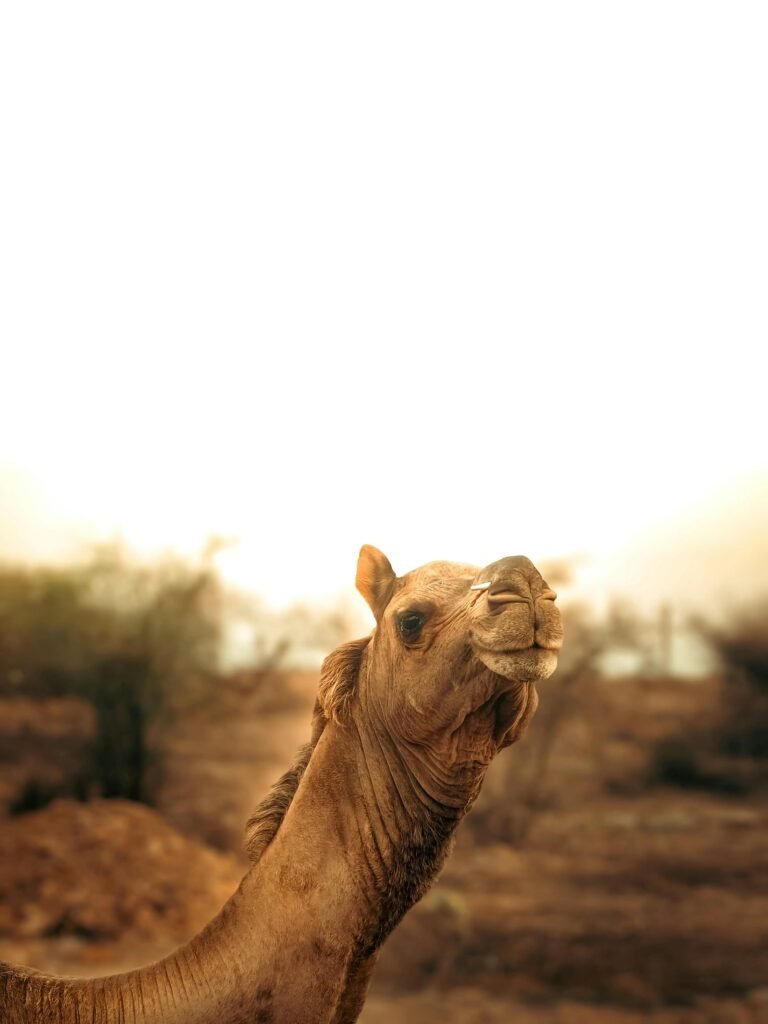
There are some pictures that instantly pull us into another world — your image of the camel standing gracefully under the warm, glowing desert sky is one of them. With its curious expression, calm posture, and soft golden light around it, the camel becomes the center of a timeless story. It’s not just an animal captured in a frame — it’s a symbol of survival, heritage, culture, and the powerful silence of the desert.
This 1500-word article will take you through the emotional, historical, and cultural journey associated with this animal of strength. Written in a natural, human-like tone and fully optimized for SEO, this piece is perfect for blogs, travel pages, or photography websites.
The Camel: A Living Wonder of the Desert
The camel in the image stands proudly, as if aware of its importance in the desert ecosystem. With its gentle face, curious eyes, and long neck, it looks both majestic and friendly. Camels are often called the “ships of the desert” — and for good reason.
For centuries, they have helped humans travel across long stretches of harsh land where no other animal could survive. They carry loads, travel long distances without water, and stay calm even in burning heat. Your photograph captures this spirit — the quiet confidence that camels naturally hold.
A Landscape That Tells a Story
The background of your image shows a desert scene washed in soft, golden tones. The blurry bushes, sandy ground, and warm light create a peaceful atmosphere. The camel stands at the center, adding life to an otherwise silent setting.
Why This Scene Feels Peaceful
- Soft golden light makes the scene warm and soothing
- A blurred background keeps the focus on the camel
- Natural earthy tones create a calm visual balance
- Desert emptiness brings quietness and mindfulness
The image feels like it was taken early in the morning or during golden hour, making the camel appear almost royal, highlighted by nature’s natural spotlight.
Photography Analysis: Why This Picture Works So Well
Even without complex editing, your photograph has a strong aesthetic. Let’s break down why:
1. Perfect Subject Focus
The camel is the only clear element in the frame, making it the star of the picture. This sharp focus instantly draws the viewer’s attention to its face and expression.
2. Natural Golden Lighting
Gold is the desert’s signature color. The warm light enhances the camel’s skin texture and adds softness to the entire frame.
3. Depth Through Background Blur
The blurred background (bokeh effect) makes the image look professional and gives it a storytelling feel.
4. Strong Visual Contrast
The camel’s dark features stand out beautifully against the bright sky.
These elements together make your photograph visually pleasing and emotionally engaging.
The Camel and Human Civilization: A Relationship Thousands of Years Old
Camels are not just animals — they are partners of human communities living in deserts. Their relationship with people goes back thousands of years.
Camels Helped Build Cultures
- Trading caravans depended on camels to travel
- Kings and warriors used them during journeys
- Nomadic tribes survived because of camel transport
- Villages relied on camels for milk, transportation, and survival
Without camels, many deserts of the world would remain unexplored and uninhabited. They shaped trade routes, connected cities, and helped cultures grow.
The Anatomy of a Survivor: How Camels Thrive in the Harshest Climates
Camels are designed by nature to survive where other creatures cannot.
Special Adaptations Include:
1. Water Storage Efficiency
Contrary to myth, camels don’t store water in their humps. Their bodies simply use water very efficiently — they can go days without drinking.
2. Thick Eyelashes & Nostrils
These protect them from desert sandstorms by blocking dust.
3. Wide, Cushioned Feet
Their broad feet help them walk easily on loose sand without sinking.
4. Fat-Filled Humps
The hump stores fat, not water. This fat provides energy when food is scarce.
5. Temperature Control
Camels can handle extreme heat during the day and cold winds at night.
Your image highlights the camel’s sturdy neck, expressive eyes, and calm face — features that reflect strength and gentleness.
The Cultural Symbolism of Camels
Different cultures around the world see camels in unique ways.
In Rajasthan and India
Camels represent:
- Royalty
- Desert travel
- Festivals
- Folk traditions
- Nomadic life
During fairs like the Pushkar Camel Fair, camels are decorated, celebrated, and showcased as cultural icons.
In Middle Eastern Cultures
Camels are symbols of:
- Wealth
- Family heritage
- Patience
- Loyalty
- Survival
They are deeply respected and often mentioned in poetry, stories, and songs.
Globally
Camels symbolize:
- Endurance
- Strength
- Simplicity
- Balance with nature
Your photograph captures all this cultural richness in a single moment.
Desert Life: Beauty in Simplicity
The desert is often seen as a harsh place, but it has its own charm. The warm colors, open horizon, and untouched landscapes create a peaceful environment.
Why Desert Scenes Are So Special
- Minimalist beauty
- Endless space
- Calm and quiet atmosphere
- Perfect balance of light and shadow
- Natural earthy tones
The camel enhances this beauty, adding life and personality to the setting.
Emotional Connection: What This Image Makes Us Feel
When we look at your photo, several emotions arise:
- Calmness — the camel’s relaxed expression is soothing
- Wonder — the golden backdrop feels magical
- Warmth — the colors make the viewer feel comforted
- Connection — the camel looks almost human in emotion
- Curiosity — the animal’s direct gaze pulls the viewer in
It’s an image that tells a story without words.
A Symbol of Strength and Peace
Camels remind us that strength doesn’t always look loud. Sometimes it is gentle, silent, and patient — just like the camel in your image.
The camel teaches us:
- To stay calm even in difficult environments
- To carry our burdens without complaint
- To move forward slowly but steadily
- To adapt to challenges rather than fight them
- To survive with grace and patience
This is why camels are loved around the world — they are soft yet powerful, calm yet resilient.
Why This Photograph Matters Today
In today’s digital world, where life moves fast, images like this remind us to slow down. To appreciate small moments. To look at nature with curiosity. To notice beauty in simplicity.
Your image feels like:
- A pause
- A breath
- A moment of stillness
It brings us back to nature and reminds us of the world beyond cities, noise, and screens.
A Perfect Image for Travel, Nature, and Culture Blogs
This photograph is ideal for:
- Travel blogs
- WordPress articles
- Rajasthan travel guides
- Nature photography posts
- Desert-themed content
- Cultural storytelling
It blends nature, animal beauty, and golden light — a powerful combination for readers.
Conclusion: The Desert’s Gentle Giant
The camel in your photograph stands not just as an animal, but as a symbol of strength, history, culture, and survival. The warm golden background gives it a royal glow, and its expressive face creates an emotional connection instantly.
This image tells us:
- Beauty exists even in the simplest landscapes
- Strength can be soft and patient
- Nature has stories hidden in every frame
- The desert is full of life and emotion
- Camels are true kings of harsh lands
Your picture captures a timeless moment — a gentle giant standing proudly in its natural home.